




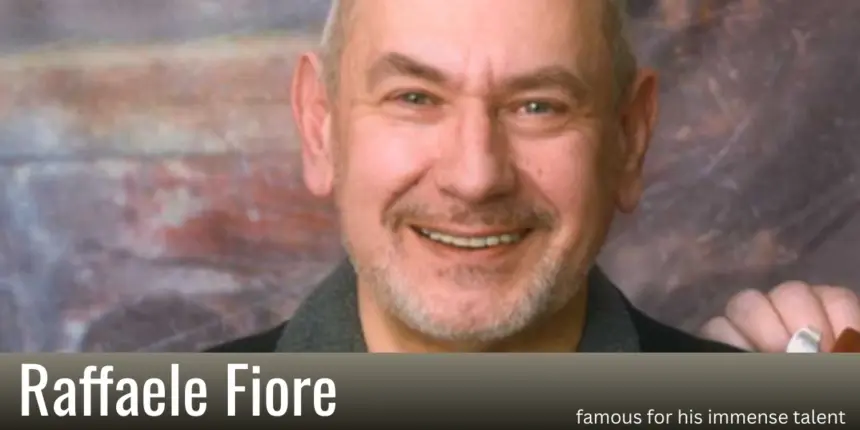
Raffaele Fiore is an Italian contemporary realist painter born in 1961, renowned for his luminous Venetian canal scenes and Tuscan landscapes. His work blends classical techniques with modern sensibility, capturing water reflections, light, and Italian atmosphere with exceptional skill.
Water ripples across a Venetian canal, catching golden afternoon light. Each reflection dances with life and energy. This is the world Raffaele Fiore brings to canvas—a world where classical technique meets contemporary vision.
Born in Naples in 1961, Fiore has spent four decades perfecting his craft. His paintings hang in private collections worldwide. They capture something beyond simple beauty. They preserve moments that digital photos can’t quite hold.
What This Article Covers
You’ll learn about Fiore’s artistic journey from Naples to Tuscany. We’ll explore his distinctive technique and signature subjects. You’ll discover what makes his work stand out in contemporary realism.
The Artist Behind the Canvas
Early Years and Training
Fiore developed his passion for painting at an early age, which led him to study at the Academy in Torino during the 1980s. This was a time when originality defined the art world. Traditional methods were being questioned and reimagined.
Born in Striano on August 13, 1961, Fiore began painting with a strong desire to represent reality while updating the masters of the past. His parents recognized his talent early. They supported his artistic education, setting him on a path that would define his life.
The young artist started with traditional approaches. But he didn’t stay there long. He experimented with colors and created his own compositions, developing a unique artistic voice.
The Tuscan Chapter
In 1993, Fiore moved to Tuscany, where he still lives and works, enriching his experience through collaboration with famous studios in Florence’s artistic center. This move proved transformative for his career.
In Florence, he reproduced classical Italian and European masterpieces, which encouraged and inspired his desire for realism. These years studying the old masters weren’t about copying. They were about understanding. Fiore learned how Leonardo, Caravaggio, and Canaletto achieved their effects. He absorbed their lessons about light, composition, and color.
The Tuscan landscape became his laboratory. Rolling hills covered with vineyards. Medieval villages perched on hilltops. Cypress trees standing like sentinels. All of it fed his artistic vision.
Fiore’s Signature Style
Water as the Central Element
What sets Fiore apart? His treatment of water.
He has studied how water reacts to wind, light, and human interaction, with changes in current and angle of reflection fascinating him. To Fiore, water isn’t background. It’s the star of the show.
Look at any of his Venetian scenes. Every ripple and reflection seems alive with light and energy. He doesn’t just paint water. He captures its movement, its texture, its very essence. The way light penetrates the surface. How reflections distort and shimmer. The depth beneath the ripples.
This obsession with water requires technical mastery. One wrong brushstroke and the illusion breaks. Fiore has spent years perfecting this skill.
Light and Shadow Mastery
His accomplished use of light and shadows with a perfect palette gives his paintings a unique feeling. This isn’t accidental. It’s the result of decades of study.
Through patient and constant study of color, techniques, composition and light, he has improved his potential as a gifted painter. He understands how Tuscan sunlight differs from Venetian glow. How morning light changes a scene compared to late afternoon. How shadows define form and create drama.
His color palette deserves special attention. Fiore doesn’t use garish hues. His colors feel natural yet somehow more vivid than reality. They create mood and atmosphere. A warm glow in a Tuscan sunset. Cool blues in a canal shadow. The interplay between warm and cool tones gives his work depth.
Contemporary Realism with Classical Roots
Fiore has a very modern and realistic style that is still somehow very reminiscent and tributary to the masters of old. This balance defines his work. He’s not creating photographic reproductions. He’s offering interpretation.
His paintings allow an echo of reality beyond the flood of images in a world merely perceived through the media. In our age of endless digital photos, Fiore offers something different. His paintings slow us down. They invite contemplation. They capture not just how a place looks, but how it feels.
Favorite Subjects and Themes
Venetian Canal Scenes
Venice has captivated artists for centuries. Fiore joins this tradition while making it his own.
His favorite subjects include Venetian canal scenes, where his masterful use of light and shadow adds distinct depth and atmosphere. He doesn’t paint the tourist Venice of St. Mark’s Square. He finds the quiet backstreets. The narrow canals where gondolas barely fit. The weathered facades with their peeling paint and ancient character.
The sense of tension from the interaction of light and shadow affords his Venetian paintings a special quality, allowing viewers to embark on a journey through time. His Venice feels timeless. It could be 1920 or today.
Recently, he’s expanded his Venetian work. Fiore has embarked on capturing the wonder of Venice at night in his atmospheric paintings. Nighttime Venice presents new challenges. Limited light sources. Reflections from windows and street lamps. The mysterious quality of darkness over water.
Tuscan Landscapes
Fiore favors painting Venetian canal scenes and Tuscan landscapes, with his work exuding the essence of Italian country and culture. His Tuscan paintings show his adopted home with deep affection.
The Tuscan landscape is the real protagonist of his research, with its beauty becoming the primary reason for inspiration. He paints the hills during harvest season. Vineyards in their various stages. Stone farmhouses weathered by centuries. The unique quality of Tuscan light that has drawn artists since the Renaissance.
His Tuscan work varies with the seasons. Spring’s fresh greens. Summer’s golden wheat fields. Autumn’s rich harvest colors. Winter’s stark beauty. Each season brings new inspiration.
The Working Method
Plein Air Sketching
Fiore can be found on location rapidly sketching a scene so as not to lose the moment to changes in light. This practice connects him to the Impressionists, who also worked outdoors to capture fleeting effects.
At art school he recognized his ability to quickly capture a moment in time on his sketch pad, which led him into contemporary realist painting. These sketches aren’t his final product. They’re research. He captures the essential elements. The light quality. The composition. The feeling of the place.
Later, in his studio, he transforms these sketches into finished paintings. This two-stage process combines immediacy with refinement. The spontaneity of the sketch meets the precision of studio work.
Technical Approach
| Aspect | Fiore’s Approach |
|---|---|
| Medium | Oil paint on canvas |
| Technique | Classical methods with modern sensibility |
| Brushwork | Both soft and fast strokes for different effects |
| Color Study | Constant experimentation with palette |
| Composition | Careful balance of elements |
| Light Study | Observing natural light in different conditions |
His soft and fast brushstrokes make the Tuscan landscape vibrant with changing light. This varied brushwork creates texture and movement. Smooth water surfaces need different handling than rough stone walls. Soft clouds require different strokes than detailed architectural elements.
Recognition and Collecting
Market Presence
His works have been appreciated from the very beginning of his career and are part of many private collections. Fiore has built a solid reputation without courting celebrity status. His work speaks for itself.
His work is sought worldwide as part of private collections, and since gaining popularity in Italy, he has only become more prolific with his work more refined. Collectors value several qualities in his work. The technical excellence that comes from years of practice. The emotional resonance of his scenes. The way his paintings remain interesting over time. They don’t exhaust themselves at first viewing.
Gallery Representation
Fiore’s work appears in galleries across multiple countries. Adams Galleries, Forest Gallery, Renjeau Art Galleries, and MacGregor Fine Art are among those representing him. Art collectors in the United States, United Kingdom, and throughout Europe acquire his pieces.
His paintings typically range from small intimate works to substantial canvases. Original oils command premium prices reflecting the skill and time invested in each piece. Limited edition prints make his work accessible to broader audiences.
What Makes Fiore’s Work Valuable
Technical Excellence
Not every painter can render water convincingly. Even fewer can make it the focal point of their work. Fiore’s technical skill places him among contemporary realism’s finest practitioners.
His understanding of light rivals that of the old masters he studied. The way he builds layers of color. How he achieves luminosity. His control of values from bright highlights to deep shadows. These aren’t skills acquired quickly. They represent decades of dedicated practice.
Emotional Connection
In his paintings, Raffaele Fiore communicates joy, vitality and a romantic atmosphere in a direct and engaging manner. Technical skill alone doesn’t make great art. Fiore’s work resonates emotionally. His Venice isn’t just accurate. It’s evocative. His Tuscany doesn’t just look right. It feels right.
People who’ve never been to Venice or Tuscany feel transported by his paintings. Those who know these places recognize their essence captured on canvas. This dual appeal—both accessible and authentic—contributes to his success.
Investment in Tradition
Through patient and constant study of color, technique, composition and light, he strives to improve his work daily. In an art world often chasing novelty, Fiore commits to excellence within tradition. He’s not reinventing painting. He’s perfecting it.
This dedication resonates with collectors who value craftsmanship. His work represents countless hours of study and practice. Each painting demonstrates hard-won expertise.
Commissioning Original Work
Several galleries handling Fiore’s work accept commissions. If you want a specific Venetian scene or Tuscan view, galleries can facilitate requests. Commission work typically requires advance notice. Complex pieces may take months to complete.
The process usually involves:
- Initial consultation about your vision
- Discussion of size and format
- Price agreement based on complexity
- Creation of preliminary sketches
- Approval before final painting begins
- Completion and delivery
Commissioned pieces allow collectors to obtain work tailored to their preferences while maintaining Fiore’s distinctive style.
Frequently Asked Questions
What style is Raffaele Fiore known for?
Contemporary realism with classical influences. His work focuses on Venetian canals and Tuscan landscapes using traditional oil painting techniques.
Where does Raffaele Fiore currently work?
e lives and works in Tuscany, Italy, where he moved in 1993 to be surrounded by landscape inspiration and artistic heritage.
What makes Fiore’s water paintings special?
His exceptional treatment of water reflections, ripples, and light interaction creates lifelike movement and depth that distinguishes his Venetian canal scenes.
Are Raffaele Fiore paintings available internationally?
Yes, his original works and prints are sold through galleries in the United States, United Kingdom, and Europe, with pieces in private collections worldwide.
What training did Raffaele Fiore receive?
He studied at the Academy in Torino and later worked in Florentine studios reproducing classical masterpieces, which refined his realist technique.
The Continuing Journey
Now in his sixties, Fiore continues painting with the same dedication he showed as a young artist in Turin. His work has matured but hasn’t become formulaic. Each painting represents fresh observation and renewed commitment to his craft.
His recent explorations of Venetian night scenes show an artist still challenging himself. Still finding new ways to see familiar subjects. Still pushing his technical abilities.
The art world changes constantly. Trends come and go. Yet quality endures. Fiore’s work will likely remain relevant because it’s built on fundamentals that transcend fashion. Light, color, composition, atmosphere—these elements spoke to viewers centuries ago and still speak today.
For those seeking contemporary realist painting rooted in classical tradition, Raffaele Fiore offers exceptional work. His paintings don’t shout for attention. They reward patient viewing. They reveal more each time you look. That quiet confidence, that refusal to compromise technical excellence for easy effect, defines his contribution to contemporary art.