

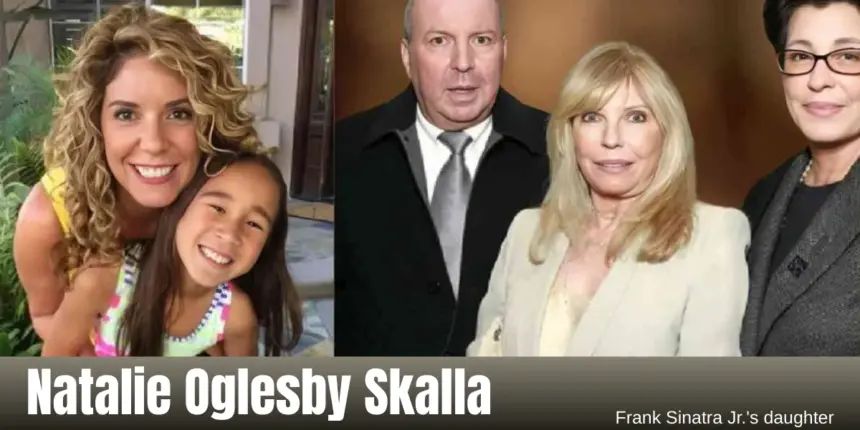
Natalie Oglesby Skalla is the daughter of Frank Sinatra Jr. and granddaughter of Frank Sinatra. Born in 1977, she works as a certified therapeutic riding instructor, helping people with disabilities through equine therapy instead of pursuing entertainment.
- Early Life and Family Background
- The Sinatra Legacy and Siblings
- Career as a Therapeutic Riding Instructor
- Marriage and Private Life
- Community Service and Impact
- Choosing Service Over Spotlight
- Financial Status and Lifestyle
- Challenges and Resilience
- Legacy Beyond Fame
- Frequently Asked Questions
- Creating Your Own Path
Most people born into fame chase the spotlight. Natalie Oglesby Skalla took a different route. As the daughter of Frank Sinatra Jr. and granddaughter of the legendary Frank Sinatra, she grew up surrounded by music history and celebrity status. But when it came time to build her career, she turned away from entertainment completely.
Today, Natalie works as a therapeutic riding instructor, teaching people with disabilities to ride horses. Her story challenges what we think we know about celebrity children and shows how purpose can matter more than fame.
This article covers Natalie’s early life with a famous father, her career in equine therapy, her family relationships, and the legacy she’s creating on her own terms. You’ll learn about the woman behind the Sinatra name and why her work matters.
Early Life and Family Background
Natalie Oglesby Skalla was born in 1977 to Frank Sinatra Jr. and Mary Sue Oglesby. Her father followed his own father into the music business as a singer, conductor, and songwriter. Her grandfather needs no introduction—Frank Sinatra remains one of America’s most celebrated entertainers.
But Natalie’s childhood wasn’t typical for a celebrity grandchild. Her parents were never married, and the relationship between Frank Jr. and Mary Sue ended when Natalie was just six months old. What followed was a complex family situation that shaped her entire life.
The Father-Daughter Relationship
Frank Sinatra Jr. initially refused to acknowledge Natalie as his daughter. He didn’t provide financial support during her early years or throughout high school. The situation created distance and uncertainty in Natalie’s life during a time when most children need stability.
Mary Sue Oglesby took legal action to establish paternity. She presented evidence including hotel receipts and plane tickets from the weekend Natalie was conceived. The case eventually led to DNA testing that confirmed Frank Jr. was Natalie’s biological father.
Even after confirmation, the relationship remained strained. Frank Jr. only began contributing to Natalie’s education when she reached college. The emotional distance never fully closed before his death in 2016.
Growing Up Oglesby
Mary Sue Oglesby worked as a residential manager and provided Natalie with a grounded upbringing away from Hollywood excess. This balance between her famous heritage and normal childhood gave Natalie perspective. She saw both worlds and could choose which one fit her values.
Mary Sue passed away in 2011 after battling cancer. Her death marked a turning point for Natalie, who had always relied on her mother’s strength and support. It also freed her from needing validation from her father’s side of the family.
The Sinatra Legacy and Siblings
Natalie has three half-siblings from her father’s other relationships. Her siblings are Francine Sinatra Anderson, Francis Wayne Sinatra, and Michael Sinatra. Like Natalie, some of Frank Jr.’s children experienced strained relationships with their father.
The Sinatra name carries weight in American culture. Frank Sinatra Sr. sold millions of records and starred in dozens of films. His influence on music and popular culture remains strong decades after his death. But that legacy also creates pressure for family members to live up to impossible standards.
Natalie made a conscious choice not to compete with that history. Instead of trying to match her grandfather’s musical achievements or her father’s career, she found her own way to make a difference.
Career as a Therapeutic Riding Instructor
Therapeutic riding uses horseback riding to support people with disabilities in improving their confidence, coordination, and emotional well-being. As a certified instructor, Natalie guides individuals through programs designed to address physical, cognitive, and emotional challenges.
What Therapeutic Riding Involves
Therapeutic riding programs adapt traditional horseback riding to meet the needs of each participant. Instructors work with riders who have conditions like autism, cerebral palsy, Down syndrome, and other disabilities. The programs focus on building specific skills while providing a sense of accomplishment.
The movement of the horse naturally mirrors human motion at the walk, which helps riders improve balance and flexibility. For people with increased muscle tone, the horse’s warmth and rhythm can help muscles relax. For those with decreased muscle tone, riding stimulates and strengthens core muscles.
Certification and Training
In 2019, Equine Empowerment congratulated Natalie on completing PATH International Instructor Certification. PATH International sets field-tested standards for safety, ethics, and effectiveness in equine-assisted services. Instructors must complete workshops and pass written and practical exams to earn certification.
The training ensures instructors understand how to work safely with both horses and riders. They learn to assess individual needs, create appropriate lesson plans, and respond to challenges that arise during sessions.
Impact on Riders
For children and adults with conditions like autism, cerebral palsy, or Down syndrome, therapeutic riding provides a sense of accomplishment while improving physical and emotional health. The benefits extend across multiple areas:
Physical Benefits:
- Improved balance and coordination
- Increased core strength
- Better posture and flexibility
- Enhanced motor skills
Emotional Benefits:
- Increased self-confidence
- Reduced stress and anxiety
- Greater independence
- Improved self-esteem
Cognitive Benefits:
- Better focus and attention span
- Improved problem-solving skills
- Enhanced memory
- Stronger communication abilities
Social Benefits:
- Teamwork with instructors and volunteers
- Social interaction with other riders
- Development of trust
- Sense of community
Horses respond to feelings and emotions, providing immediate feedback to riders. This non-verbal communication helps people understand their own emotional states and learn to manage them better.
Marriage and Private Life
Natalie is married to Brian Skalla. Together, they’ve built a life centered on privacy and personal values rather than public attention. The couple stays away from media coverage and celebrity events.
They share a blended family, including stepchildren Dillon and Avery. Natalie has embraced her role as stepmother with the same commitment she brings to her professional work. Her dedication to family reflects the values her mother instilled in her.
Unlike many people connected to famous families, Natalie and Brian don’t use social media to share their personal lives. They maintain boundaries that protect their privacy and allow them to focus on what matters to them.
Community Service and Impact
Natalie’s work extends beyond individual riding sessions. Through her dedication, she helps individuals with disabilities experience healing and joy. She likely works with local equine therapy organizations to promote programs that serve children and adults in her community.
Therapeutic riding programs require significant resources. They need trained horses, qualified instructors, volunteers, proper facilities, and adaptive equipment. By dedicating herself to this field, Natalie contributes to an entire ecosystem of support for people with disabilities.
The impact of her work shows up in the progress of individual riders. Parents see their children gain confidence. Adults with injuries learn to trust their bodies again. People who face daily challenges discover they can accomplish something difficult and rewarding.
Choosing Service Over Spotlight
Natalie’s career choice stands in stark contrast to typical paths for celebrity descendants. She could have pursued acting, music, or any number of high-profile careers. Her last name alone would have opened doors in entertainment.
Instead, she chose work that requires patience, empathy, and dedication without offering fame or fortune. Her story serves as a reminder that true value lies in authenticity, service, and quiet strength.
This choice reflects several important values:
Independence: Natalie defined success for herself rather than accepting others’ definitions.
Compassion: She prioritized helping people over personal gain.
Authenticity: She built a life that aligned with her true interests and values.
Service: She chose work that makes a tangible difference in people’s lives.
These values likely grew from her experiences growing up. Watching fame from the outside may have shown her its limitations. Her mother’s grounded approach to life provided a different model of what mattered.
Financial Status and Lifestyle
Natalie’s exact net worth is not publicly disclosed. Unlike her famous relatives who accumulated wealth through entertainment careers, Natalie lives comfortably but modestly. Her income comes from her work as a therapeutic riding instructor rather than royalties or celebrity ventures.
Therapeutic riding instructors typically earn between $30,000 and $50,000 annually, depending on location and experience. The work provides personal satisfaction and purpose rather than luxury or wealth.
Natalie’s lifestyle choices reflect her priorities. She doesn’t seek expensive homes, designer clothes, or the trappings of celebrity life. Her success is measured in the progress of her riders and the strength of her relationships.
Challenges and Resilience
Growing up with a father who refused to acknowledge her created significant emotional challenges. The absence of acknowledgment created a chasm that no DNA test could bridge. Rather than let that void define her, Natalie used it as a foundation for personal growth.
She faced other challenges that come with a famous surname. People made assumptions about her based on her family connections. They expected her to behave certain ways or pursue certain paths. Public curiosity about her personal life created pressure to either embrace or reject her heritage.
Natalie had to navigate the complexities of being associated with a celebrity family while striving to establish her own identity. She managed this by creating clear boundaries, focusing on her own values, and building a career separate from entertainment.
Her resilience shows in her commitment to service and her refusal to seek public validation. She didn’t need her father’s acknowledgment to know her worth. She didn’t need fame to feel successful.
Legacy Beyond Fame
Though she may not have songs or films to her name, Natalie Oglesby Skalla is building a legacy of another kind—one rooted in healing, humility, and human connection.
Her life demonstrates that legacy isn’t only about what you’re known for. It’s also about the lives you touch and the values you live by. While Frank Sinatra’s music will be remembered for generations, Natalie’s impact on individual riders matters just as much to those people and their families.
She proves that you don’t have to follow family tradition to honor your heritage. You can respect where you come from while choosing your own direction. You can acknowledge your background while refusing to let it define your entire identity.
Frequently Asked Questions
Who is Natalie Oglesby Skalla?
She is the daughter of Frank Sinatra Jr. and a certified therapeutic riding instructor who helps people with disabilities through equine therapy.
How is Natalie related to Frank Sinatra?
She is Frank Sinatra’s granddaughter through her father, Frank Sinatra Jr., who was the legendary singer’s only son.
What does Natalie Oglesby Skalla do for a living?
She works as a PATH International certified therapeutic riding instructor, teaching horseback riding to individuals with physical and cognitive disabilities.
Is Natalie Oglesby Skalla married?
Yes, she is married to Brian Skalla and they maintain a private life away from public attention.
Did Frank Sinatra Jr. acknowledg Natalie as his daughter?
Initially no, but DNA testing confirmed their relationship. He began supporting her financially during her college years.
Creating Your Own Path
Natalie Oglesby Skalla’s story offers powerful lessons about identity, purpose, and choice. She didn’t let family expectations dictate her career. She didn’t use her famous name to gain advantages she hadn’t earned. She found work that aligned with her values and committed herself to it.
Her life challenges assumptions about what makes someone successful or important. Fame and fortune matter less than meaningful work and genuine relationships. Public recognition means nothing compared to personal satisfaction and the knowledge that you’re making a difference.
Anyone facing pressure to follow a predetermined path can learn from Natalie’s example. You don’t owe your family a specific career. You don’t have to live up to others’ achievements. You can honor your heritage while building something entirely your own.
The riders Natalie works with gain more than physical skills. They learn that they’re capable of more than they thought. They experience freedom and joy. They build confidence that carries into other areas of their lives. That’s a legacy worth building, even if it never makes headlines.