





Marc Fogel is a 63-year-old American history teacher from Pennsylvania who was detained in Russia from August 2021 to February 2025 for carrying medical cannabis. He was released through diplomatic negotiations led by President Trump after serving over three years of a 14-year sentence.
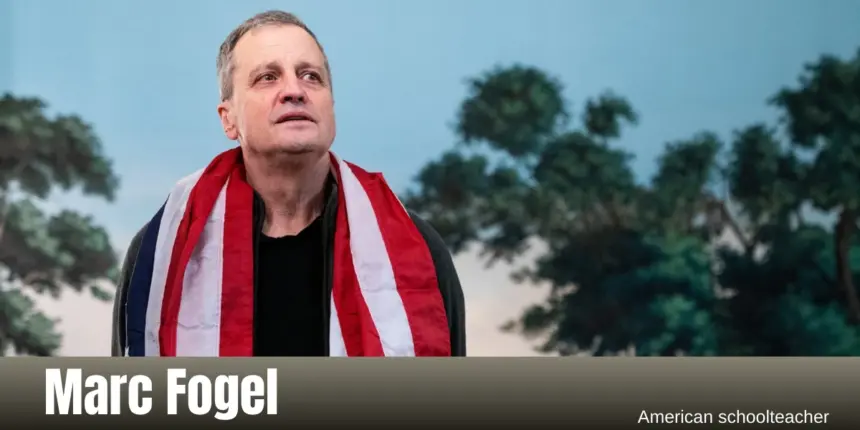
Marc Fogel walked into the White House on February 11, 2025, wrapped in an American flag. Snow fell lightly as President Trump greeted the Pennsylvania teacher who had spent 1,255 days in Russian custody. His voice broke as he said he felt like the luckiest man on Earth.
Marc Fogel was arrested in August 2021 by Russian authorities for trying to enter Russia with 17 grams of medical cannabis. What should have been a routine return to his teaching job in Moscow became a nightmare that would separate him from his family for over three years.
This article covers Marc Fogel’s background as an international educator, the circumstances of his arrest, his lengthy imprisonment in Russia, the diplomatic efforts that secured his release, and what his case reveals about wrongful detention abroad.
Who Is Marc Fogel?
Marc Fogel was born on July 28, 1961, and is from Pennsylvania, United States. He grew up in Butler County as the son of Cubby and Malphine Fogel, with two sisters, Lisa and Anne. His roots in western Pennsylvania ran deep, and he remained a passionate Pittsburgh Steelers fan no matter where his career took him.
He attended Indiana University of Pennsylvania and was a history teacher at international schools in Colombia, Malaysia, Oman, Mexico and Venezuela. His wife Jane, also a teacher, accompanied him on this 35-year journey teaching the children of American diplomats around the world. Their two sons, Ethan and Sam, grew up as global citizens while their parents shaped young minds in international schools.
He had lived and worked in Russia since 2012, teaching at the Anglo-American School of Moscow. The school catered to children of U.S. diplomats and other international families. For nearly a decade, Fogel built a reputation as a dedicated educator who made history come alive for his students.
Career Highlights
| Teaching Location | Years | School Type |
|---|---|---|
| Colombia | Multiple years | International school |
| Malaysia | Multiple years | International school |
| Oman | Multiple years | International school |
| Venezuela | Multiple years | International school |
| Russia (Moscow) | 2012-2021 | Anglo-American School |
Former students remember Fogel as someone who ran the model UN program and created engaging classroom experiences. One former student recalled how he would ride a moped to school and had students remove their shoes before entering his classroom.
The Arrest That Changed Everything
In August 2021, Fogel entered Russia through customs at Sheremetyevo Airport when 17 grams of medical cannabis was found in his luggage. He was returning to Moscow to begin what would have been his 36th year of teaching before retirement. The substance had been prescribed to him in the United States to treat chronic pain resulting from three unsuccessful back surgeries.
Russia has strict drug laws, and authorities accused Fogel of keeping the cannabis carefully disguised in his luggage. What his family and doctors described as legitimate medical treatment became, in Russian eyes, international drug smuggling.
In June 2022, Fogel was convicted of drug trafficking and sentenced to 14 years in prison. The harsh sentence shocked his family and supporters. Many pointed out the disparity between his case and other Americans detained in Russia for similar amounts of controlled substances.
Life in Russian Custody
After his conviction, Fogel was transferred to a penal colony in Rybinsk, about 200 miles north of Moscow. Russian penal colonies are notorious for brutal conditions and harsh labor requirements.
His health deteriorated significantly during imprisonment. According to officials, Fogel spent over 100 days in hospitals while in Russian custody, including a three-week stay in July 2024. He experienced muscle atrophy, neuropathy in his feet, and suffered multiple falls. Fogel received more than 400 injections during his imprisonment.
The isolation took a mental toll as well. Being imprisoned in a remote location where he did not speak the language and could not understand what medical procedures were being performed made his situation even more challenging. His family worried that his age and physical condition made the 14-year sentence essentially a death sentence.
The Fight for Recognition
For years, Marc Fogel’s name remained absent from official U.S. government lists of wrongfully detained Americans. His family fought tirelessly for recognition and inclusion in prisoner exchange negotiations.
The exclusion became particularly painful when other Americans detained in Russia were released through high-profile swaps. Fogel’s family voiced their disappointment that Fogel had not been included in exchanges, implying his lack of notoriety to be the cause. They stated that Marc should be prioritized in swap negotiations regardless of his level of celebrity.
On August 1, 2024, National Security Advisor Jake Sullivan described Fogel as wrongfully detained, the first time a U.S. official had done so. This designation was critical because it placed him under protections provided by the Levinson Act, which assists U.S. nationals taken hostage or unlawfully detained abroad.
On December 27, 2024, Marc Fogel was designated by the U.S. Department of State as wrongfully detained in Russia. Pennsylvania Representative Mike Kelly called the designation long overdue but critical.
Political Support
A bipartisan group of Pennsylvania lawmakers championed Fogel’s cause. Senators Bob Casey and John Fetterman, along with Representatives Mike Kelly, Chris Deluzio, and Guy Reschenthaler, consistently pushed for his release.
In 2024, a short documentary about Fogel’s case titled “Did You Forget Mr. Fogel?” was released. On July 22, 2024, it was screened at the United States Capitol for senators and representatives. The documentary significantly increased public awareness of his imprisonment.
The Promise That Led to Freedom
On July 13, 2024, something happened that would prove pivotal. President Trump met with Malphine Fogel in Butler, Pennsylvania, and promised to bring her son home if he became president. This meeting occurred at a campaign rally where Trump survived an assassination attempt.
After Trump’s inauguration in January 2025, his administration moved quickly. National security adviser Mike Waltz, CIA Director John Ratcliffe, Secretary of State Marco Rubio, and special envoy Steve Witkoff worked on negotiations. The deal came together in just days, with assistance from Saudi Arabia’s Mohammed bin Salman.
On February 11, 2025, Marc Fogel was released by Russian authorities following diplomatic negotiations, headed by President Donald Trump. Alexander Vinnik, an accused Russian money launderer, was released from U.S. custody in exchange for Marc Fogel. Vinnik was accused of running a cryptocurrency exchange that processed over $9 billion in transactions and allegedly did business with criminals.
The Emotional Homecoming
Fogel arrived at the White House draped in an American flag and was greeted by Trump. Fighting back tears, he thanked the president and called him a hero. “I feel like the luckiest man on Earth right now,” Fogel said. “I’m a middle-class school teacher who’s now in a dream world.”
Trump joked that he had to bring Fogel home or face trouble with his 95-year-old mother, Malphine. The president described the exchange terms as “very fair, very reasonable.”
In his statement after returning home, Fogel wrote: “Free at last, free at last, thank God almighty I am free at last”. He acknowledged the thousands who never forgot him and fought for his release. He completed medical evaluations through State Department transition protocols before rejoining his community.
Pennsylvania leaders celebrated his return. Governor Josh Shapiro welcomed him home, stating he belonged exactly where he was. Senators and representatives from both parties praised the efforts that brought him back to American soil.
Frequently Asked Questions
Why was Marc Fogel detained in Russia?
He was arrested for entering Russia with 17 grams of medical cannabis prescribed for chronic pain treatment. Russian authorities convicted him of large-scale drug smuggling.
How long was Marc Fogel imprisoned?
He was detained for approximately 3.5 years, from August 2021 until February 2025, serving time in a Russian penal colony before his release.
Who secured Marc Fogel’s release?
President Trump, Special Envoy Steve Witkoff, Secretary of State Marco Rubio, and national security adviser Mike Waltz negotiated his release through a prisoner exchange with Russia.
What happened in the prisoner exchange?
Russian money launderer Alexander Vinnik was released from U.S. custody in exchange for Fogel. Vinnik had to forfeit money seized by the U.S. government.
Are there other Americans detained in Russia?
Yes, at least 10 U.S. citizens remain in Russian custody, including military personnel and dual nationals. The State Department continues working on their cases.
What This Case Reveals
Marc Fogel’s ordeal highlights the dangers Americans face when traveling with medications that are legal in the United States but prohibited in other countries. His case also demonstrates the complexities of hostage diplomacy between the United States and Russia.
The delay in designating Fogel as wrongfully detained raised questions about how the U.S. government prioritizes cases. Critics noted that higher-profile detainees received designations and were included in swaps while Fogel remained in custody.
His release marks a shift in U.S.-Russia relations under the Trump administration. Trump suggested Fogel’s release was a good faith gesture by Russia and could play an important part in ending the war in Ukraine. The president indicated he had a phone call with Russian President Vladimir Putin shortly after the release.
Life After Release
Since returning home, Marc Fogel has focused on recovery and reconnecting with family. He completed medical evaluations and transition protocols required by the State Department. His family, who never gave up fighting for his freedom, finally has him back in Pennsylvania.
Fogel is scheduled to attend the 2025 Pennsylvania CannFest in October to advocate for marijuana reform. This will be his first public appearance where he advocates for cannabis legalization. Organizers are creating a Marc Fogel Lounge at the festival and have invited Governor Josh Shapiro to meet privately with Fogel.
His case has become a rallying point for those pushing to modernize marijuana laws. Advocates argue that his ordeal demonstrates why Pennsylvania and other states must reform their cannabis policies and work toward federal legalization.
Conclusion
Marc Fogel’s journey from a Moscow airport to a Russian penal colony and finally home to Pennsylvania represents both personal tragedy and diplomatic triumph. His 1,255 days in custody highlight the precarious position of Americans abroad who rely on medications that cross international legal boundaries.
His mother never stopped fighting. His sisters never stopped advocating. His students and colleagues never forgot. Pennsylvania lawmakers from both parties pushed relentlessly for his designation as wrongfully detained. And when a new administration took office, promises made were promises kept.
Fogel’s story reminds us that behind every diplomatic negotiation are real people with families who love them. His release offers hope to other families waiting for their loved ones to come home. As he rebuilds his life in western Pennsylvania, his experience will likely fuel continued conversations about medical marijuana policies, wrongful detention, and the value America places on bringing its citizens home.