



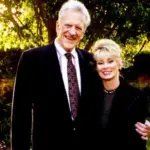



Tommy Nolan is a Canadian-American former child actor and music journalist, born January 15, 1948. He starred in the NBC western Buckskin (1958-59) before becoming a groundbreaking music writer, authoring the influential 1971 Rolling Stone article on the Beach Boys.
You might not recognize the name Tommy Nolan immediately. But if you watched television in the late 1950s, his face was everywhere. Born Bernard Girouard in Montreal on January 15, 1948, this French-Canadian child actor captured hearts across America with his emotional performances and natural talent. He could cry on command, play sympathetic characters with ease, and had what Hollywood insiders called “that special something.”
What makes Tommy Nolan truly fascinating is not just his childhood fame. It’s what he did after the cameras stopped rolling. He became one of the most important music journalists of the 1970s, writing an article that would change how we talk about rock bands forever.
What This Article Covers: We’ll explore Tommy Nolan’s rise as a child star in the golden age of television westerns, his starring role in the series Buckskin, his difficult transition out of acting, and his remarkable second career as a music journalist whose work influenced generations of writers.
The Early Years in Hollywood
Tommy Nolan’s family moved from Montreal to Los Angeles when his mother needed medical care. He was only three years old when he started dance classes. This early training gave him the physical grace and confidence that would serve him well on camera.
His television debut came in a big way. He played Prince Edward of Wales, son of Henry VIII, on NBC’s prestigious Hallmark Hall of Fame. This wasn’t just any role. It was a statement that young Tommy had serious acting chops.
Throughout the 1950s, the jug-eared lad often portrayed young boys with afflictions, such as a crippled youngster on an episode of My Friend Flicka or his wealthy asthmatic on Medic. His ability to connect emotionally with audiences made him a sought-after young performer.
Notable Film Appearances
Tommy appeared in several films during his childhood years:
- The Seven Year Itch (1955) – Working with director Billy Wilder
- Kiss Me, Stupid (1964) – Another Wilder collaboration
- The Toy Tiger (1956)
- All Mine to Give (1957)
What’s remarkable is that Billy Wilder usually avoided working with child and teen actors as much as possible, but he did not hesitate to cast a very young Tom Nolan in two separate films.
Buckskin: The Role That Made Him Famous
At age 10, Tommy Nolan landed the role that would define his childhood career. He was cast as Jody O’Connell in the NBC western series Buckskin, which ran from July 1958 to September 1959.
Buckskin was different from other westerns of its time. The program was unique in that it was a nonviolent western seen from a child’s perspective, with Tommy narrating each episode while sitting on his corral fence and playing his harmonica. The show featured Jody’s perspective on life in frontier Montana, where his widowed mother Annie (played by Sally Brophy) ran a boarding house.
The series produced 39 episodes and started as a summer replacement for The Tennessee Ernie Ford Show. It proved popular enough to continue beyond its initial run and was repeated in summers of 1959 and 1965.
The Success and Its Impact
Buckskin made Tommy Nolan a household name among young television viewers. Tommy had comic books out with his character and his autograph was well in demand at parades, conventions and other public outings.
For a 10-year-old boy, this level of fame was intoxicating. He was recognized everywhere. Parents wanted their children to meet him. He represented wholesome, family-friendly entertainment during television’s golden age.
| Buckskin Series Facts | |
|---|---|
| Network | NBC |
| Air Dates | July 1958 – September 1959 |
| Episodes | 39 |
| Tommy’s Role | Jody O’Connell |
| Character Type | Non-violent western narrator |
The Difficult Transition Years
After Buckskin ended, Tommy continued working in television. He appeared on many popular western series including:
- Rawhide
- The Rifleman
- Gunsmoke
- Wagon Train
- Lassie (recurring role)
But something was changing. As Tommy entered his teenage years, the roles became harder to find. He was no longer the adorable child actor who could tug at heartstrings. He was becoming an awkward teenager in an industry that had specific ideas about how young people should look.
The Reality of Child Stardom
Tommy Nolan reflected later: “They teach you to succeed, but you’re unprepared for failure. You’re led to expect fame, but no one tells you about the rejection waiting at the end of the trip”.
This quote captures the painful reality many child actors face. The industry builds you up, makes you feel special, and then moves on to the next young face. For Tommy, “something fantastic had been given to me, then taken away, leaving a big hollow place at the center of my twelve-year-old life”.
By 1970, his acting career had essentially ended. His last significant role was a small part in the film The Moonshine War.
Reinvention as a Music Journalist
Many child actors fade into obscurity after their careers end. Tommy Nolan chose a different path. He became a writer.
In 1971, he wrote an article for Rolling Stone magazine that would change music journalism forever. The piece was called “The Beach Boys: A California Saga.”
Why This Article Mattered
The story devoted minimal attention to the group’s music, and instead focused on the band’s internal dynamics and history, particularly around the period when they fell out of step with the 1960s counterculture.
This was revolutionary. Most music writing in 1971 focused on the songs, the albums, the performances. Nolan did something different. He looked at the Beach Boys as people with complex relationships, family drama, and internal struggles.
According to journalist David Hepworth, the style was unprecedented in the field of music writing, and the story within was destined to become a classic piece from that brief interlude when pop writing collided with New Journalism.
The New Journalism Approach
New Journalism was a movement that brought literary techniques to journalism. Writers like Tom Wolfe and Hunter S. Thompson were making waves with immersive, narrative-driven reporting.
Tommy Nolan applied these techniques to music writing. He spent time with the Beach Boys. He observed their interactions. He captured their tensions and conflicts. The result was a portrait that felt honest and raw in ways that traditional music journalism rarely achieved.
A Lasting Legacy in Music Writing
After the Beach Boys article, Tommy Nolan continued writing for major publications throughout the 1970s and beyond. His work appeared in:
- Playboy
- Los Angeles Times
- Village Voice
- Phonograph Record
He wrote profiles of major rock musicians including the Carpenters, the Faces, Elton John, John Prine, Randy Newman, and the Eagles. Each piece maintained his signature style of deep, empathetic examination.
Book-Length Biographies
As his career progressed, Nolan moved into longer-form writing. He authored two acclaimed biographies:
Ross Macdonald: A Biography (1999) – A comprehensive account of the crime novelist’s life and work.
Three Chords for Beauty’s Sake: The Life of Artie Shaw (2010) – Drawing on extensive interviews, this book explored the jazz clarinetist’s career and personal struggles. Critics praised its insight and depth.
Both books demonstrated Nolan’s ability to bring the same careful attention to detail and human understanding that marked his music journalism.
Later Acting Career
Interestingly, Tommy Nolan returned to acting as an adult, though in much smaller roles. He appeared in:
- Up the Creek (1984)
- School Spirit (1985)
- Pretty Woman (1990)
- Pacific Heights (1990)
- The Thing Called Love (1993)
- White Man’s Burden (1995)
- Batman Begins (2005)
These were minor parts – waiters, valets, courtroom deputies. Nothing like his childhood stardom. But perhaps that was the point. He had found his true calling as a writer.
Frequently Asked Questions
What was Tommy Nolan’s most famous role?
His starring role as Jody O’Connell in the NBC western series Buckskin from 1958-1959 made him a household name.
Why did Tommy Nolan stop acting as a child?
He struggled to transition into teenage roles during puberty and faced industry rejection, ending his first acting career in 1970.
What was Tommy Nolan’s Beach Boys article about?
His 1971 Rolling Stone piece focused on the band’s internal dynamics and personal struggles rather than just their music.
Did Tommy Nolan write any books?
Yes, he authored biographies of crime novelist Ross Macdonald (1999) and jazz musician Artie Shaw (2010).
Is Tommy Nolan related to the Nolan sisters?
No, despite sharing a last name, there is no family connection between actor Tommy Nolan and the Irish singing group.
The Transformation That Mattered
Tommy Nolan’s story is not just about a child star who faded away. It’s about someone who took rejection and disappointment and transformed them into something meaningful. He moved from performing to observing, from being watched to watching others.
His journey from the sets of Hollywood to the pages of Rolling Stone represents a rare kind of success. He didn’t just survive the end of his acting career. He created an entirely new one that arguably had more lasting impact.
Today, when music writers craft intimate portraits of artists, when they look beyond the surface to explore personal dynamics and human complexity, they’re walking a path Tommy Nolan helped create. His 1971 Beach Boys article remains a landmark in music journalism. It showed that rock musicians could be subjects of serious, literary treatment.
The child star who once narrated tales of the Old West sitting on a corral fence went on to tell stories that changed how we understand the artists who shape our culture. That’s a legacy worth remembering.